Brick vs stone vs concrete: choosing the right material
By Dana Whitfield · Updated 2026-07-30
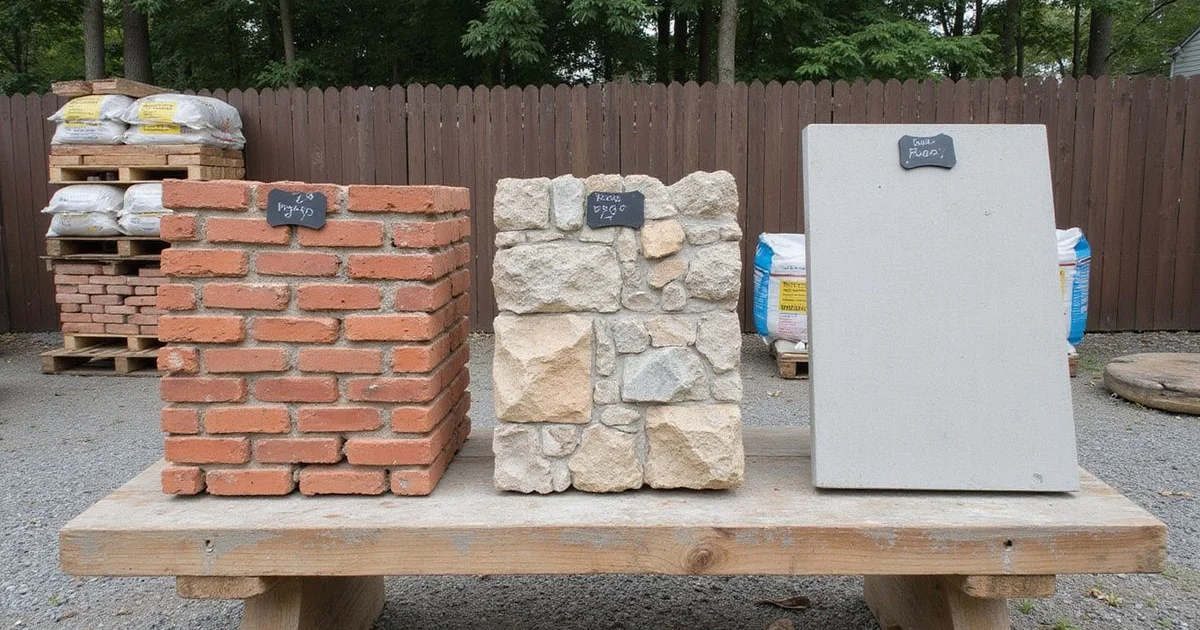
Choosing between brick, stone, and concrete is usually less about which material is “best” and more about which trade-offs fit your project, budget, and how much upkeep you want to sign up for. Each has a real place in Connecticut masonry work.
Brick
Brick brings a classic, uniform look and works well for walkways, wall facades, and accent features. Because each brick is the same size, a skilled mason can lay it in decorative patterns relatively efficiently compared to irregular stone.
- Strengths: consistent appearance, moderate cost, easier section repairs, wide color range.
- Trade-offs: more visible mortar joints that need occasional repointing, can shift with ground movement if the base was not properly prepped.
Natural stone
Stone gives a more organic, higher-end look, whether that is a fieldstone retaining wall or a flagstone patio. It tends to be the most labor-intensive to install because no two pieces are identical.
- Strengths: distinctive appearance, excellent durability, ages well.
- Trade-offs: highest material and labor cost, longer install time, less predictable final look until it is finished.
Concrete
Poured concrete is the most common choice for driveways and large patios because it is efficient to install at scale and holds up well under vehicle weight when properly reinforced.
- Strengths: lowest cost per square foot, fastest install for large areas, wide range of finish options (stamped, colored, exposed aggregate).
- Trade-offs: cracking over time is common (usually cosmetic), less repairable in isolated sections without a visible patch.
| Factor | Brick | Natural stone | Concrete |
|---|---|---|---|
| Relative cost | Moderate | Highest | Lowest |
| Install time (per sq ft) | Moderate | Longest | Fastest |
| Repairability | Good (section replacement) | Good (section replacement) | Harder (patch or replace slab) |
| Maintenance | Occasional repointing | Minimal | Occasional sealing, crack monitoring |
| Best for | Walkways, facades, accents | Walls, patios, high-end features | Driveways, large patios, slabs |
A few real-world combinations
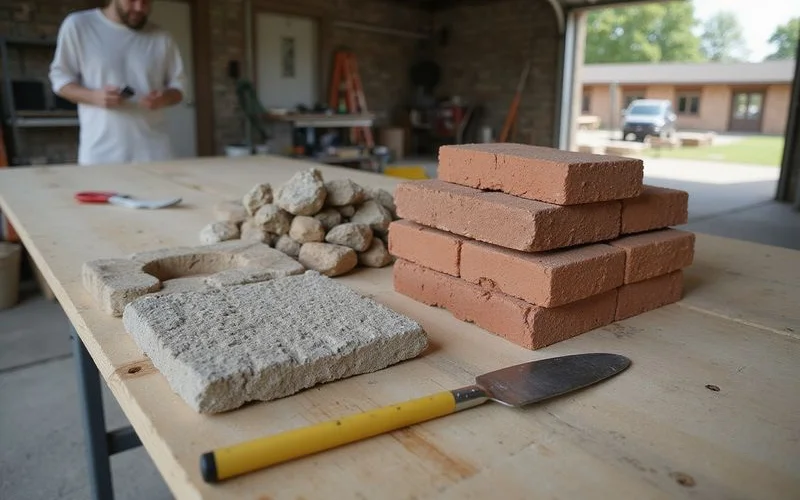
Many Connecticut homeowners do not pick just one. A concrete driveway paired with a brick or stone walkway to the front door is a common combination that balances cost and curb appeal. A stone retaining wall alongside a concrete patio is another frequent pairing, since the wall is a smaller area where the higher material cost matters less.
How to decide
Start with what the surface needs to do. A driveway that needs to support vehicle weight over a large area usually points toward concrete on cost grounds alone. A retaining wall or a small feature patio, where appearance carries more weight, is where stone or brick earns its higher price. Budget, timeline, and how much long-term maintenance you want to take on are the other deciding factors.
Start from the directory homepage to browse Connecticut contractors who specialize in each material. This directory’s ranking method scores every listing on review sentiment, completeness, and recency, which is a good way to narrow down options once you have settled on a material.
The bottom line
There is no universally better material among brick, stone, and concrete, only a better fit for a specific project. Weigh cost against how much visual character and long-term durability matter to you, and let the surface’s actual job, driveway, patio, or wall, guide the final call.
FAQ
- Which material lasts the longest?
- Natural stone and well-laid brick both hold up for decades with basic maintenance. Poured concrete also lasts a long time but is more prone to visible cracking over the years, though those cracks are usually cosmetic rather than structural.
- What is the cheapest option for a patio?
- Poured concrete is generally the lowest cost per square foot among the three, followed by brick, with natural stone typically the most expensive due to material and labor.
- Is one material easier to repair than another?
- Brick and paver-style stone are easier to repair in sections, since an individual damaged piece can be pulled and replaced. A cracked concrete slab usually needs patching or, in worse cases, replacing the whole section.
- Does the choice matter for resale value?
- Natural stone and brick are often seen as higher-end finishes and can be a modest selling point, but a well-maintained concrete surface will not hurt a sale either. Condition matters more than material for most buyers.