What to expect from a stone masonry project, start to finish
By Dana Whitfield · Updated 2026-07-20
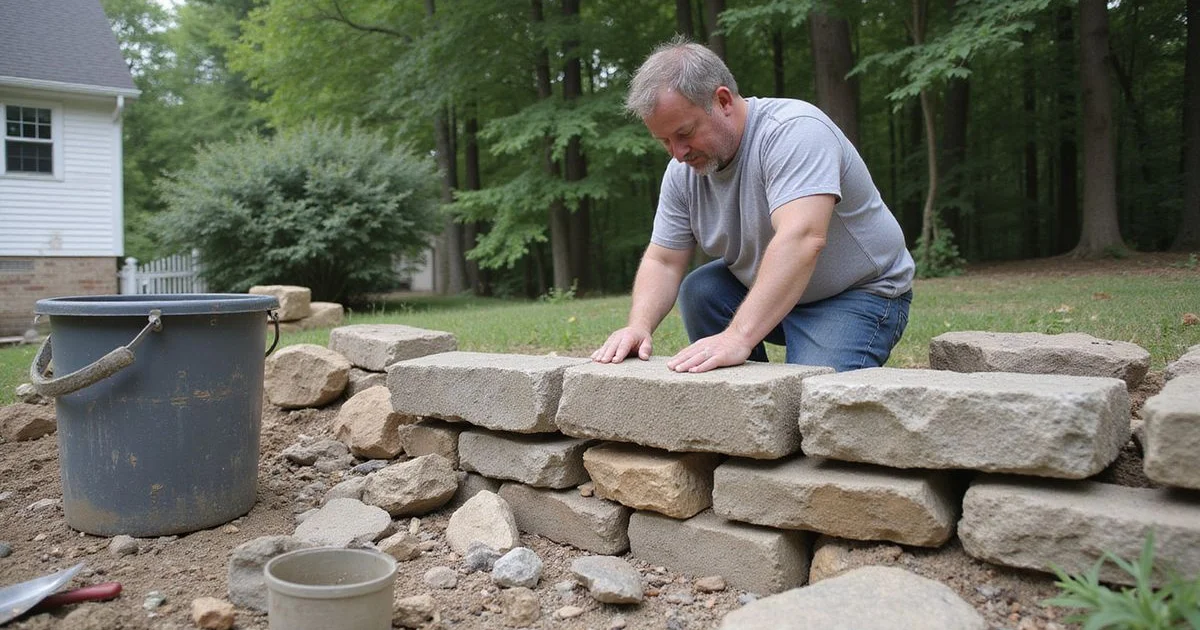
Stone masonry has a different rhythm than brick or poured concrete work. There is no standard unit size, no repeating pattern to fall back on, and the final look depends heavily on the mason’s eye for fit as much as their technical skill. If you are planning a stone wall, veneer, or walkway, knowing the process helps you set realistic expectations for timeline and cost.
Step 1: Site visit and stone selection
A mason walks the site to assess grade, drainage, and what the stone needs to do structurally versus decoratively. This is also when you settle on stone type: fieldstone, quarried stone, or a manufactured veneer product. Natural stone sourced closer to Connecticut tends to weather more predictably in the state’s freeze-thaw climate than stone shipped in from a very different region.
Step 2: Footings, if the wall is structural
Any stone wall meant to retain soil or bear weight typically needs a footing below the frost line so seasonal ground movement does not crack or shift it over time. A low decorative garden wall may not need one; a taller retaining or structural wall almost always does.
Step 3: Sorting and dry-fitting
Before mortar goes anywhere, an experienced mason sorts stones by size and shape and often dry-fits a section to check how pieces interlock. This step is what separates a wall that looks intentional from one that looks like stacked rubble, and it is also why stone work takes longer than brick or block per square foot.
| Project element | What it involves | Why it takes time |
|---|---|---|
| Stone sorting | Grouping by size, shape, face | No two stones are identical |
| Dry-fitting | Testing fit before mortar | Prevents gaps and weak points |
| Mortaring or dry-stacking | Setting each course | Requires checking level constantly |
| Pointing and cleanup | Finishing joints, washing residue | Determines the finished look |
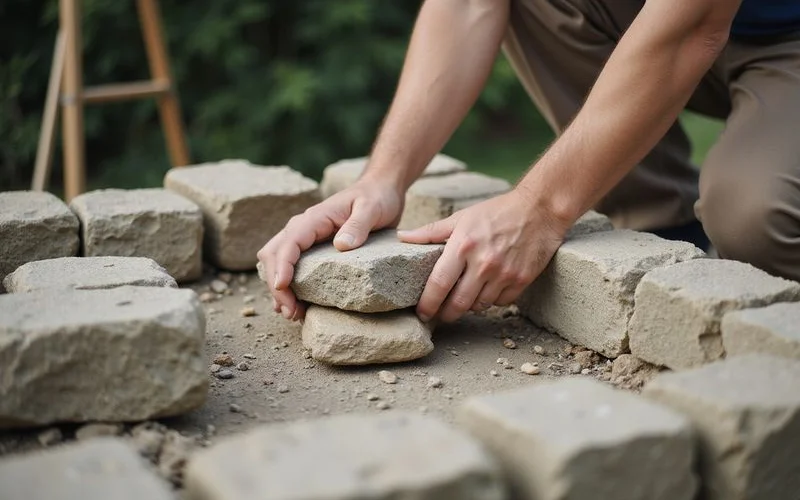
Step 4: Setting and pointing
Stones go in course by course, with the mason constantly checking level and adjusting fit. Mortar joints get pointed, or finished, once the wall is up, which affects both the water resistance and the final appearance.
Step 5: Curing and cleanup
Fresh mortar needs time to cure before the wall is disturbed, typically a few days to a week depending on weather. A thorough mason also washes down any mortar residue left on the stone face, since dried mortar haze is difficult to remove once it sets.
What separates a good stone mason from a rushed job
Attention to detail is the trait Connecticut homeowners mention most often when a stone project goes well, and it shows up specifically in fit and joint consistency. A wall with tight, even joints and stones that appear chosen for their spot, not just grabbed off the pile, is a sign of a mason who is not racing the clock. You can browse local specialists on the stone masonry category page, where review sentiment surfaces which contractors consistently deliver that level of care; see the ranking method for how that scoring works.
Setting a realistic timeline
Because stone work depends on hand-fitting, rushing the schedule usually shows up in the final product. If a quote promises a large stone wall in a day or two, ask how many masons will be on site and whether that pace is realistic for the stone type you chose.
The bottom line
Stone masonry rewards patience, both from the mason and the homeowner. The steps that take the longest, sorting, dry-fitting, and careful setting, are also the steps that determine whether the finished wall or walkway holds up for decades. Start from the directory homepage to compare masons across every stone, brick, and concrete specialty in Connecticut.
FAQ
- Is stone masonry slower than brick or block work?
- Usually yes, especially with natural fieldstone, because each piece is a different shape and size and has to be hand-fit rather than laid in a repeating pattern.
- Do I get to choose the individual stones used?
- Many stone masons will let you review a sample pallet or visit the stone yard, especially for a visible feature like a wall facade or fireplace surround. For a full stone wall, the mason typically sorts and selects as they build.
- What is the difference between dry-stack and mortared stone walls?
- A dry-stack wall relies on the weight and fit of the stones themselves, with no mortar, and needs a skilled hand to stay stable. A mortared wall uses cement-based mortar between stones for added strength, which is more common for taller structural walls.
- How long does a stone wall project take?
- A small garden wall might take three to five days. A longer structural wall, or one requiring footings, can take two to three weeks depending on length and stone type.