Chimney damage warning signs: when it becomes a safety risk
By Dana Whitfield · Updated 2026-07-23
This guide is general information to help you recognize warning signs. It is not a substitute for a professional inspection, and any suspected gas or carbon monoxide issue should be treated as urgent.
A chimney can look fine from the driveway and still have a problem that matters. Because chimneys sit above the roofline and often go unseen for years at a time, damage tends to progress quietly until it shows up as a leak, a smell, or in the more serious cases, a safety hazard inside the home.
Signs that are cosmetic, but worth watching
- Minor mortar cracking. Small hairline cracks in mortar joints are common with age and Connecticut’s freeze-thaw winters. They are not usually urgent but should be repointed before they widen.
- Efflorescence. The white, chalky residue that sometimes appears on brick is a sign water is moving through the masonry. It is not dangerous on its own, but it points to moisture that can cause bigger problems if ignored.
Signs that mean it is time to call someone
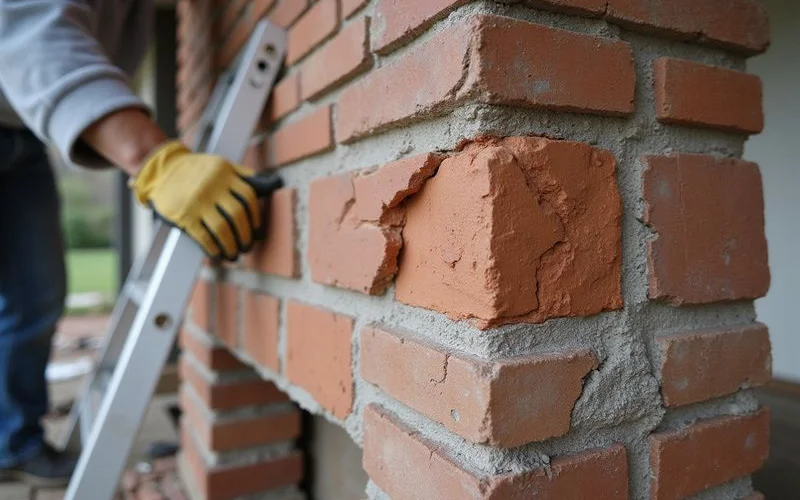
- Spalling brick. Chunks of brick face flaking or popping off is a sign that trapped moisture froze and expanded inside the masonry. Left alone, this weakens the structure over successive winters.
- A damaged or missing crown. Cracks in the concrete cap at the top of the chimney let water directly into the structure and, eventually, into the flue liner.
- Rust stains around the firebox or damper. This often means water is getting into the flue, which can damage the liner and lead to more expensive repairs.
- Staining on ceilings or walls near the chimney. This usually indicates flashing failure where the chimney meets the roof, letting water into the house itself.
Signs that are a genuine safety concern
| Warning sign | What it may mean | Recommended action |
|---|---|---|
| Visible leaning or bulging | Structural failure, possible foundation issue | Professional inspection promptly |
| Loose or falling bricks | Structural deterioration | Stop using the fireplace until inspected |
| Cracked or deteriorated flue liner | Combustion gases or heat reaching combustible materials | Professional inspection promptly |
| Smoke smell without a fire burning | Possible venting or draft failure | Have a carbon monoxide detector installed and inspect promptly |
Why the flue liner matters more than people expect
A chimney’s job is not just to look structurally sound, it is to safely carry combustion gases out of the home. A cracked or deteriorated liner can let heat or gas reach nearby wood framing or leak carbon monoxide into living space, which is why a liner problem is treated with more urgency than surface-level brick wear. If your chimney is original to an older home, that is worth mentioning specifically when you book an inspection.
Getting it looked at
A masonry contractor who explains what they are checking and why, rather than pointing at a crack and quoting a number, is generally the safer choice for a safety-related inspection. Skilled craftsmanship and clear communication are consistently the traits Connecticut homeowners point to after a chimney inspection goes well. You can compare local chimney specialists on the chimney masonry category page, or start from the homepage to browse contractors across every masonry specialty. This directory’s ranking method weighs review sentiment and completeness when scoring listings.
The bottom line
Most chimney damage starts small and cosmetic. The signs worth acting on quickly are the ones tied to structure (leaning, falling bricks) or venting (liner cracks, smoke smell), since those are the ones that can turn into a genuine safety issue rather than a maintenance item.
FAQ
- Can a damaged chimney really cause a carbon monoxide problem?
- Yes. Cracks in the flue liner or gaps where the chimney meets the roof can let combustion gases leak into the living space instead of venting outside. This is one of the more serious reasons chimney damage should not be left alone.
- Is white staining on brick dangerous?
- White staining, called efflorescence, is not dangerous by itself, but it is a sign that water is moving through the masonry, which can lead to more serious freeze-thaw damage over time if the moisture source is not addressed.
- How often should a chimney be inspected?
- An annual inspection before the heating season is the general recommendation, especially for chimneys serving a wood-burning fireplace or older furnace.
- What should I do if I see a leaning chimney?
- A visibly leaning chimney is a structural concern and warrants a prompt professional inspection rather than a wait-and-see approach, since it can indicate foundation or masonry failure below the surface.
Related on this site
- Browse chimney masonry & repair providers
- Best chimney masonry & repair in Connecticut →
- What chimney repair and rebuilding costs in Connecticut
- Do you need a permit to rebuild a chimney in Connecticut
- Retaining wall failure and drainage problems: what makes a wall unsafe
- Efflorescence and spalling: what brick damage is telling you
- All guides →