Commercial masonry maintenance: what Connecticut property managers need to know
By Dana Whitfield · Updated 2026-08-30
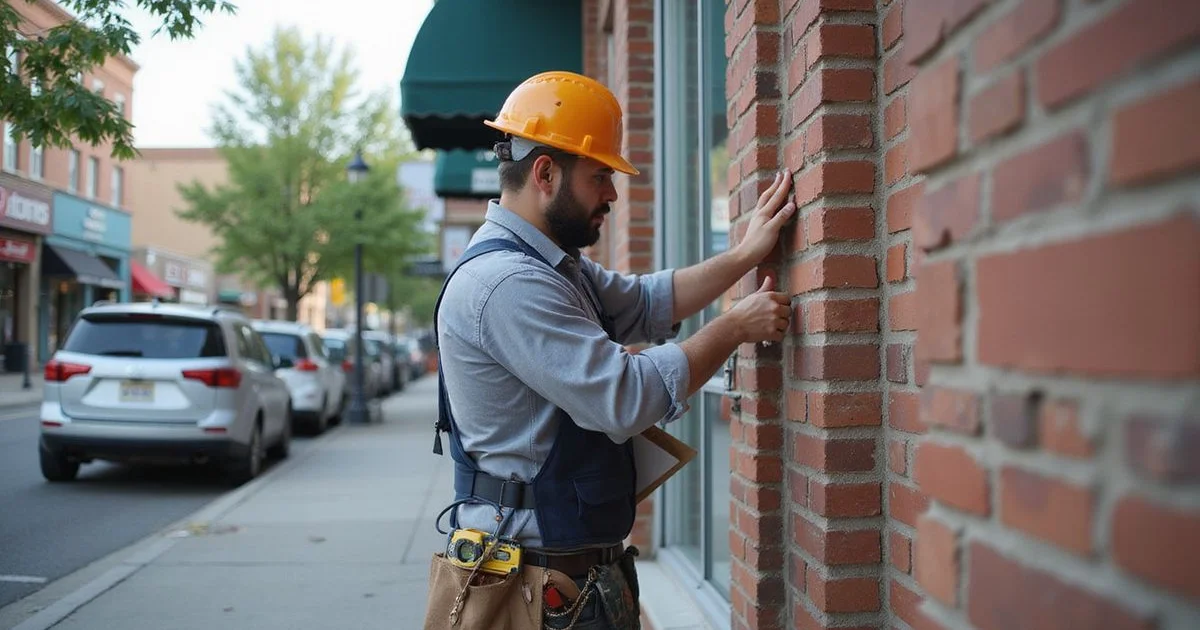
Commercial masonry gets less daily attention than a storefront’s interior or a parking lot, but it carries real liability and capital planning implications when it is neglected. For property managers and building owners in Connecticut, a proactive maintenance approach costs less over time than reacting to visible failures.
Where commercial masonry problems typically start
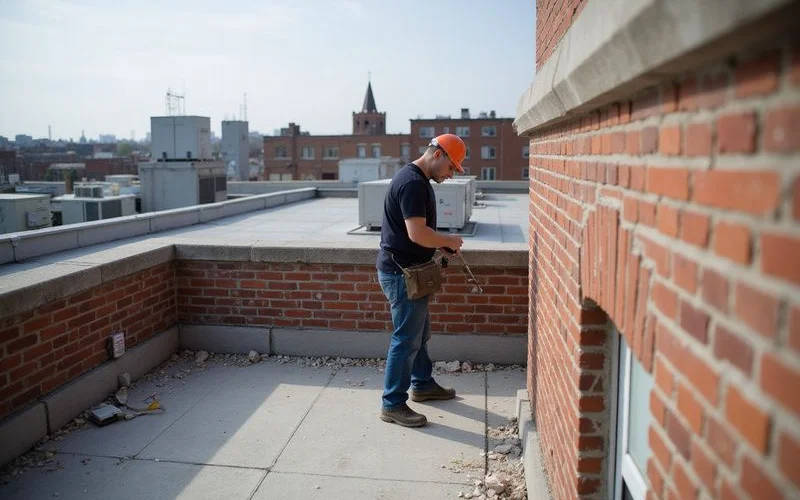
- Parapet walls. These low walls above the roofline take weather from multiple sides and are frequently overlooked because they are not visible from ground level or from inside the building.
- Expansion and control joints. Commercial buildings rely on these joints to accommodate material movement. When sealant fails, water gets behind the masonry and freeze-thaw damage follows.
- Ground-level facade near sidewalks and loading areas. Higher foot and vehicle traffic exposure means more wear, plus de-icing salt exposure in winter, which accelerates masonry deterioration.
- Flashing at rooflines and window openings. Failure here is a common source of water intrusion that shows up as interior staining long before the exterior masonry looks obviously damaged.
A practical inspection cadence
| Interval | What to check | Why |
|---|---|---|
| Annually | Visual walk of exterior, focus on parapets and joints | Catches early cracking or sealant failure |
| Every 3 to 5 years | Closer inspection, possibly with lift access | Identifies issues not visible from the ground |
| After major storms | Targeted check of exposed areas | Storm damage can accelerate existing wear |
| Before major capital projects | Full assessment tied to budget planning | Aligns repair timing with available capital |
Budgeting for maintenance versus reacting to failure
Deferred masonry maintenance on commercial buildings tends to follow a predictable pattern: a small, inexpensive issue like a failed sealant joint or minor cracking goes unaddressed, water gets behind the facade, and a few years later the fix has grown into a much larger, more disruptive repair. Building a modest annual maintenance budget for masonry, rather than treating it as a one-time capital expense, tends to be the more cost-effective approach over a building’s life. The same seasonal risk applies to a commercial facade as it does to a house; the fall masonry prep checklist covers the tasks that reduce it.
Working around occupied buildings
Commercial masonry work often needs to happen without disrupting tenants, customers, or daily operations, which can mean scheduling work outside business hours, coordinating access with tenants, or phasing a larger project across sections of a facade. A contractor experienced in commercial work will typically raise these logistics during the quoting process rather than after the contract is signed, which is worth asking about directly.
Choosing a commercial masonry contractor
Look for a contractor with direct experience on commercial-scale projects, not just residential work scaled up. Responsive communication and reliable scheduling matter more on commercial jobs than residential ones, since delays can affect tenants or business operations. You can compare Connecticut commercial masonry specialists on the commercial masonry category page, where this directory’s ranking method weighs review sentiment and completeness. Start from the homepage if your property also needs residential-scale masonry work addressed.
The bottom line
Commercial masonry rewards a proactive maintenance schedule over reactive repair. Parapets, joints, and flashing are the areas most likely to fail first and least likely to get noticed without a deliberate inspection routine, so building that routine into your annual planning is the single highest-value step a property manager can take.
FAQ
- How often should a commercial building's masonry be inspected?
- An annual visual inspection is a reasonable baseline, with a more thorough assessment every few years or after any major storm event. Buildings with a history of masonry issues warrant more frequent checks.
- What is the most common masonry failure point on commercial buildings?
- Parapet walls, the low walls extending above the roofline, are frequently a problem area because they take direct weather exposure on multiple sides and are easy to overlook during routine building maintenance.
- Is commercial masonry work more expensive than residential?
- It can be, partly due to scale and partly due to access requirements like scaffolding or lift equipment for taller buildings, and sometimes due to work needing to happen outside business hours.
- Should masonry repairs be budgeted annually or as they come up?
- Building a modest annual line item for masonry maintenance tends to be more cost-effective than reactive repairs, since catching small issues early avoids the larger, more disruptive fixes that come from deferred maintenance.